
Fun with Skitch

Tags:
Marci and I are now aunts... again. ;)
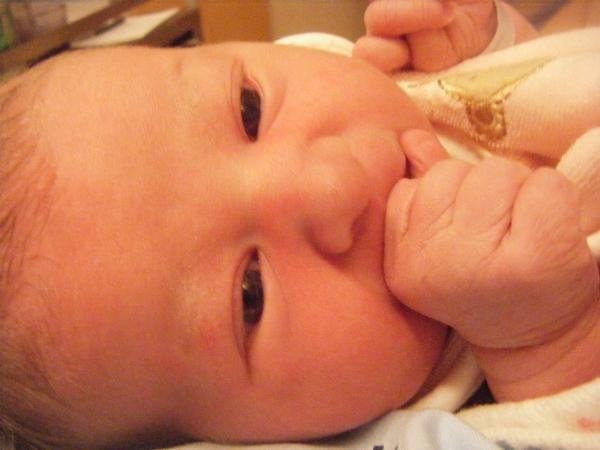
7.2 lbs and 19 3/4 inches of pure coding genius! ;) I have high hopes that she'll make core maintainer by Drupal 14. ;)
Congrats, Sara!!
Sam Dean from OStatic sent me some questions via e-mail last week. Their website's mission statement reads:
Our goal is to increase the adoption of Open Source Software by helping users find viable projects and applications that fulfill specific needs, evaluate them against available alternatives and collaborate with their network of trusted peers.
I would love to see a series of blog posts from Drupal developers on patch review strategies they employ, so we can share some tips and tricks and ramp up our collective review IQs. I'll start it off with mine. I call it "The 6-Pass Patch Review" (wittier names welcome! ;))
To begin, crack open your text editor. You'll use it to jot down notes and questions as you go through each of these passes. Other than that, no fancy tools are required to do most of this other than a keen set of eyes, an inquisitive mind, and the ability to empathize with people new to Drupal and put yourself in their shoes. (Of course, if you are relatively new to Drupal, then patch review can actually come easier for you than other people. :) Start today!)
Back at Drupalcon Szeged, I sat down with Michelle Pace from The Next Women to rave all about Drupal and the Drupal community for an hour or so. :) It was really interesting talking to her about her first impressions at Drupalcon and most of our discussions centered around what makes an open source community tick.
You can check out her write-up over at Sourcing Angie Byron.
Thanks, Michelle!
As a standards zealot, one of the things I'd personally love to see happen in Drupal 7 is the eradication of table-based layouts. I'm giving stink-eye directly at you, Pushbutton, Chameleon, and Bluemarine. These themes are a strange abberation from the Drupal project's otherwise very meticulous attention to detail regarding web standards, and I'm quite positive that they directly contribute to the Drupal project's ongoing struggles to attract and retain visual designers. Garland is a huge step up, but it was never designed to be an easy to modify base theme, and unless designers happen to stumble across something like Zen, I imagine they come away thinking that Drupal's markup is ugly and antiquated and go to something a bit nicer out of the box like WordPress.
I want Drupal 7 to be an incredible release that ramps up the user experience by 1,000-fold, and making Drupal more accessible to designers and themers (along with an accompanying selection of great looking designs out of the box) is a huge part of that. Fortunately, I'm not alone!
In coordination with several prominent members of Drupal's design/theming community, including Joon Park, John Wilkins, Brad Bowman, Stephanie Pakrul, and Earl Miles, we've come up with what we think is a workable plan for accomplishing these goals.
The overall gist is:
So if you either a) are a web standards zealot who wants to lend your expertise to the discussion on selecting the default markup, or b) have some time / energy / etc. to help organize a theming contest, please coordinate over at http://groups.drupal.org/node/16200!
If you sent me a personal e-mail in the past week, I no longer have it. >:\ Apparently either DreamHost or Thunderbird choked to death on the 20,262 e-mails I had waiting for me after I came back from vacation and thought it'd be an awesome idea to just give up and delete them all. THANKS. Thankfully, @lullabot.com goes somewhere else, so those are ok.
On a related note, anyone know of any decent e-mail providers? :P
Sigh. :(
Today was the first day of my vacation (linking to Wikipedia in case you, like me, were not sure what this word meant) so naturally a bunch of us spent the entire day in #drupal slashing through bugs and features in preparation of DRUPAL-7-0-UNSTABLE-2 which should be tagged tomorrow, with lots of nice goodies. :)
Tomorrow and Saturday, I'm headed off to Drupalcamp Montréal, our first such event in the fair city.
Like all such "Open Spaces" events, we won't really know what the schedule is until tomorrow morning, but here are the sessions I'm planning on giving, in relative order of geekiness:
As of this writing, there are over 5,600 active issues in the Drupal core queue. About half of those are listed in the 2,650 active issues for Drupal 7. And the "patch queue for Drupal 7 -- those issues that have at least *some* code to fix them in various stages of completion -- clocks in at 1,040 issues.
These numbers are, quite frankly, staggering. Discouraging, even, some might say. With so many issues out there vying for attention, how are we to find those ones that are really important, such as killer new features, powerful API enhancements, and critical bug fixes? While Drupal 7's development cycle doesn't have an expiration date on it yet, we all know that day will come, and probably sooner than we'd ideally like. What can we do to make sure that important patches are raised to the surface and receive adequate developer and committer attention?
To succeed, we'll need to employ a two-pronged approach: taking out the trash, and digging up the treasure.
